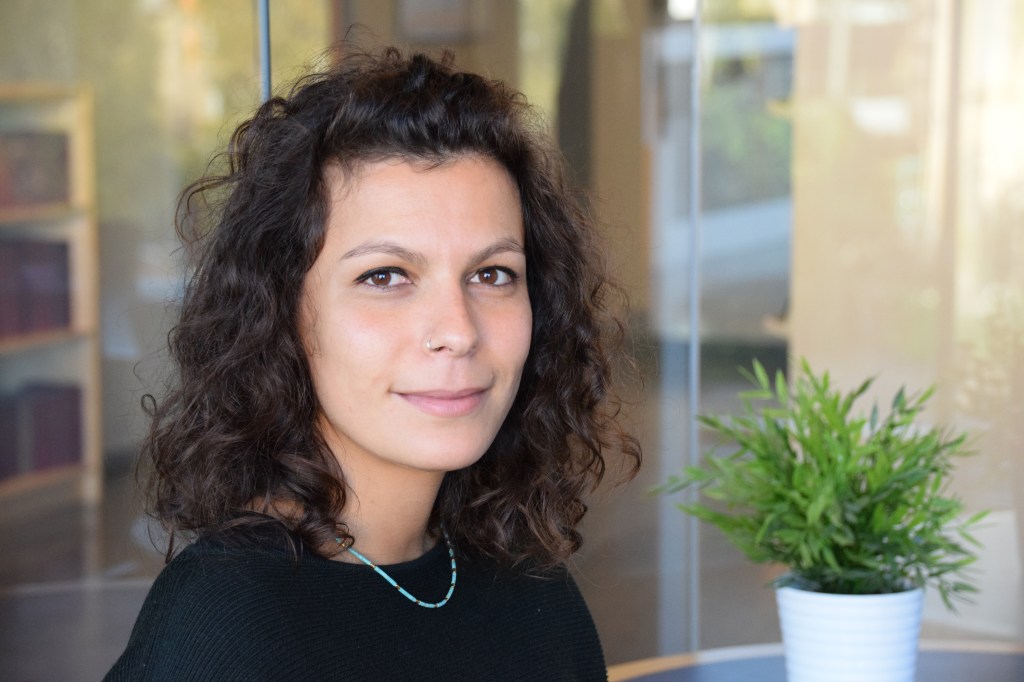
Catalonia: Challenging the Notions of Nationalism

Marc Perelló-Sobrepere

Nationalism has been one of the determining forces of modern history. After the fall of the Ancient Empires, it represented something to be proud of: the defence of one’s citizenship, traditions, language and culture-with Hans Kohn being one of the major historians of the old nationalism. The fascist movements of the Europe of the 19th and 20th centuries, however, caused the term to develop many negative connotations. Today, it is often related to authoritative regimes and political ideas of exclusion rather than inclusion. It is even used as an insult in some political and cultural magazines. In terms of language also, a huge effort has been made to debate differences between ‘nationalism’ and ‘patriotism’, concluding that the latter contains all the good will that the former supposedly lacks.

The truth is, however, that nationalism is an evolving term with a rich history and many footnotes, depending on which type we are discussing. The many theories under which academics have been studying and defining most of the nationalist movements that there have been in contemporary history derive from the works of Hans Kohn, Anthony Smith, Tom Nairn, John Breuilly and Elie Kedourie to name a few. Kedourie takes a hostile stance towards nationalism and defines it as a form of politics that is unrelated to reality. He labels it a new form of romanticism and cites Fichte and Herder as examples of intellectuals who have been seduced. In a similar way, Smith claims that nationalism is nothing but an exaggeration of history combined with mythology. Breuilly is equally critical, suggesting that nationalist leaders aim for total control of the masses. Nairn also shares the idea that nationalism is an elite movement that seeks to spread throughout the masses. Most, if not all of the 20th century scholars describe nationalism negatively.

More recently, however, writers such as Taras Kuzio, Rogers Brubaker, Will Kymlicka and Montserrat Guibernau have challenged these assumptions, demonstrating that the new nationalisms’ characteristics are too varied to fit under a single, negatively- connotated umbrella. For instance, Guibernau describes Catalan nationalism as a form of nationalism without a state, tearing apart the premise that the ideology needs a state to survive. Guibernau’s definition seems quite appropriate if we consider that most Catalans are nowadays in favour of a new state. Yet how exactly is Catalan nationalism different from other types?

Contrary to most nationalist movements, Catalan nationalism is a bottom-up process, having arisen from social movements.

Contrary to most nationalist movements, Catalan nationalism is a bottom-up process, having arisen from social movements. In this case, the masses convinced the elite to pursue a Catalan state, not the other way around. In fact, the leading political party in Catalonia for the majority of the last twenty years, CiU (Convergència i Unió), always denied the possibility of a new state. It was not until after 11th September 2012 that this idea was even considered by its then-leader, Artur Mas, after millions went out onto the streets of Barcelona demanding independence. Since then, the party has been reformed under the name JxC (Junts per Catalunya) and is now led by Carles Puigdemont. He is currently exiled in Brussels, however, due to the Spanish state prosecution of those Catalan leaders who declared independence in 2017, even though this declaration never had a legal impact on either Spanish or Catalan politics.

Another major pillar of nationalism that is challenged by Catalan nationalism is that of romanticism. While it does have its own fair dose of mythology and idolized history, these are not at this nationalism’s core. The growth of this nationalism in the past two decades -and thus the growth in the number of supporters of independence- stems mainly from economic interest, rather than from a sentimental or mythological ideology. Different studies carried out by some of the most prominent economists have revealed that Catalonia would benefit more from being a new state than from remaining as part of Spain; Catalan GDP is actually one of Europe’s highest. To many Catalans out there, independence is, in fact, a rather pragmatic matter of survival.

In 2015, a newly formed political coalition aiming for independence won the Catalan elections. In 2017, after the failed declaration of independence, the pro-independence parties formed a government once again, only this time as two separate parties: JxC and ERC. Additionally, in the 2019 Spanish General Election, the pro-independence parties won more seats in the Spanish Congress than ever before. The Spanish answer to the ever-growing support for independence has drifted between feigned dialogue (always within the limits of the Spanish Constitution) and a legal-criminal response that witnesses several of the old leaders of Catalan independentism behind bars at this time.


It must be said that social networks have had a huge influence in the deployment of Catalan nationalism.

It must be said that social networks have had a huge influence in the deployment of Catalan nationalism. The more social networks’ popularity has spread among Catalans, the more supporters of independence there have been. Many arguments and reasons to support independence have been shared by Catalan activists on social networks, with effective results. Catalan nationalism also benefits from a huge pool of supporters based in academia thanks to a pacifying tone and well-researched arguments regarding the formation of a new state in Europe. The two most recent Spanish foreign ministers, Alfonso Dastis and Josep Borrell, have acknowledged that the international empathy, even sympathy, expressed towards the Catalan pro-independence movement stems, in part, from academia-related efforts to sustain Catalan claims. International attention was also drawn by the referenda of 9th November 2014 and 1st October 2017, both organized without the Spanish government’s approval and also by the terrific police charges that followed the second.

Could Catalan nationalism ultimately lead to the creation of a new Catalan state? Such an idea should not surprise anyone in Europe-over 20 new states came to be during the 20th and 21st centuries. However, while the Yes to independence leads most surveys on this issue, the Spanish state is not even considering such a possibility. While some far-right and conservative politicians (from the Partido Popular, Ciudadanos and VOX) fantasize about the possibility of erasing Catalan autonomy, currently under a pro-independence government, the centre-left and left parties (PSOE, Podemos) aim for a political solution within the limits of the Spanish Constitution. This would, however, exclude the chance for a referendum like the one held in Scotland in 2014. With the Catalan pro-independence supporters gaining power in Catalonia and the two major political forces in Spain not allowing a referendum (let alone an eventual secession) for both sides, engaging in sincere dialogue will, sooner or later, be a necessity.

Marc Perelló-Sobrepere holds a PhD in Communications (Universitat Ramon Llull – URL).

Marc is Professor at Universitat International de Catalunya (UIC) and Universitat Autònoma de Barcelona (UAB). Former Visiting Researcher at City University London and at the University of Copenhagen.

Marc’s research focuses on digital communication and political activism, especially massive social networks and its social-political use.

Further reading:

For Stuart Sim’s introduction to the journal edition, go here

Paul Bowman’s Open Access piece, The Limits of Post-Marxism: The
(dis)Function of Political Theory in Film and Cultural Studies,
is here

Read Ronaldo Munck’s Global Discourse journal article, Democracy Without
Hegemony: A Reply to Mark Purcell
, here

The whole of Global Discourse Volume 9, Number 2, May 2019
Reflections on post-Marxism: Laclau and Mouffe’s project of radical
democracy in the 21st century, Guest Edited by Stuart Sim
, is available here

India, Populism, and the power of the ‘Other’

Adam Saraswati Rawlings, Comment Editor for SCAN

In the seventy two years since India gained its independence from the British, a distinct precedent has been espoused throughout political discourses is that of religious difference. Established in the very partition of India, a dichotomy has formed, and grown, between India’s Hindu majority and it’s religious minorities. This is most often historically India’s Muslim majority (which is destined to become the largest single population of Muslims in the world) but has from time to time turned to Sikhs (notably in the 1980s), and other communities. This narrative of religious difference is not a impenetrable barrier to religious cohesion in India, in fact it can be argued that India displays a more sophisticated model of religion conscious democracy, though the ever growing populist narrative of India’s politics, this assessment grows weaker and weaker.

Continue reading

Workers of the World Unite (At Last)

Professor Ronaldo Munck

Rising developments within labor challenge the conventional progressive wisdom that neoliberal globalization has been an unprecedented disaster for workers, trade unions, and the labor movement. The obstacles to labor organizing, of course, do pose serious challenges. Increased mobility of capital has led to a sharp increase in relocation, outsourcing, and offshoring. Multinational corporations can wield the threat of plant closures against workers’ requests for better wages or states’ efforts to raise taxes. Executives at multinational corporations can even pit their own plants against each other, going back and forth between them to get local managers and workers to underbid each other in a race to the bottom. At the same time, the increased mobility of labor has led to increased migration, which can be seen as a threat to wages and working conditions if migrant workers are introduced into a settled labor force. Corporations can then stoke divisions among their workers across racial, ethnic, and linguistic lines to undermine the foundation of solidarity necessary to organize.

Labor faces these and myriad other obstacles in our rapidly changing, interconnected world. However, fixating on obstacles creates a facile pessimism. Globalization may have opened as many doors as it closed. At the most basic level, the globalization of communication has countered one of the most formidable barriers to global action. With email, social media, and other online platforms, workers enjoy better tools to organize across countries—imagine trying to organize a transnational strike a century ago. Moreover, globalized communication fosters solidarity as workers are able to see, hear, and share each other’s stories.[1] Looking ahead, improvements in translation software could help bridge the language divide, thereby opening new paths to transcultural dialogue. Globalized capitalism may have created the basis for a new global working class, not only in material conditions but also in consciousness.

Transnational unionism can take many forms. It can operate among union executives or on a grassroots level, while organizing can be workplace-oriented or based on collaboration with NGOs on issue campaigns. Successful transnational unionism has the capacity to navigate complexity and operate on multiple levels. In particular, transnationally oriented unions have used globalization to their benefit by organizing transnational labor actions, forming new transnational structures, and fostering solidarity with migrant workers at home.

When a transnational corporation spreads production nodes across countries, thus distributing the workforce, the geographic expansion also increases the possible leverage points for organizing against the corporation. The workers of Irish budget airline Ryanair understand this well. Since Ryanair’s foundation in 1984, CEO Michael O’Leary had been a vocal opponent of union organizing, but workers chose not to listen. In mid-2018, they went on strike—starting in Ireland before spreading across the continent—for pay increases, direct employment, and collective labor agreements that comply with national labor laws. Management, which had used its transnational status to play workers against each other, was confronted by a united cross-national organized labor force.

Labor has also showed strength by partnering with allies at different points along the globally dispersed production chain. A campaign against sweatshops in the apparel industry showed how direct action by students in the US can support organizing by workers in Honduras. Garment workers in global production chains are usually considered weak compared to hypermobile, high-profit companies like Nike.[2] But such corporations are vulnerable to boycotts. Transnational union resources focused on a particular industry or country have considerable power to deny market share and thereby bolster demands at the point of production.

Besides enabling specific actions, the new economic landscape has given rise to new organizing structures, as labor unions realize that old methods of operating can no longer suffice. In the 1960s, the International Trade Secretariats (today known as Global Union Federations, or GUFs) began to respond to the expansion of multinational corporations (MNCs) through the formation of World Company Councils. First established by the United Auto Workers and the International Metalworkers’ Foundation, the World Company Councils coordinated the activities of the various national trade unions across a multinational corporation’s operations. However, they proved unable to create the stability and continuity needed to achieve the transnational collective bargaining power the unions hoped to develop.[3]

By the 1990s, the international union strategy had shifted from the promotion of voluntary “codes of conduct” with MNCs and the introduction of “social clauses” (including labor rights) into trade agreements, to the more ambitious and comprehensive Global Framework Agreements (GFAs). An expression of transnational labor solidarity, GFAs bind a company’s global operations to the labor standards of the headquarters, usually based in Europe. Thus, gains won where labor is stronger can spread to where it is weaker. By 2015, 156 Global Framework Agreements had been signed around the world, focused mainly on core workplace conditions and the right to collective bargaining.[4]

Developments like GFAs grew from the realization that relying on old national-level collective bargaining had turned into a dead end. Labor needed new strategies, tactics, and organizational modalities. With “business as usual” organizing modes no longer adequate, many trade union leaders began calling for global solidarity. They called into question labor’s “special status” alongside the state and employers—the famous tripartite modality of the International Labor Organization. If capital now organized itself predominantly as a transnational player, so, too, would the international trade unions need to “go global.”

A significant manifestation of this shift is the emergence of global unions. In 2008, the workers of the United Steelworkers in the US merged with Unite the Union, the largest labor organization in Britain and Ireland. The new union, Workers Uniting, represented almost 3 million workers at its founding in the steel, paper, oil, health care, and transportation industries. Oil conglomerate BP and steel behemoth ArcelorMittal are both transnational; now, their workers are transnational too, refusing to be pitted against each other in negotiations. Maritime workers, who have a built-in internationalism, have taken similar steps. In 2006, in response to the globalization of the shipping industry, the National Union of Marine, Aviation and Shipping Transport Officers in the UK developed a formal partnership with the Dutch maritime workers’ union Federatie van Werknemers in de Zeevaart, renaming themselves Nautilus UK and Nautilus NL respectively. Two years later, workers took the partnership a step further, voting to create a single transnational union: Nautilus International. In 2015, the United Auto Workers in the US and IG Metall in Germany joined forces to create the Transatlantic Labor Institute focusing on auto worker representation issues at the US plants of German auto manufacturers.[5] In a decade’s span, transnationalism has entered the trade union mainstream as leadership catches up with the objective possibilities opened up by globalization.

Notably, the smartest unions are treating migrant workers not as a threat but as an opportunity. By making common cause with migrant workers, trade unions have deepened their democratic role by integrating migrant workers into unions and combatting divisive and racist political forces. In Singapore and Hong Kong, state-sponsored unions have recruited migrant workers, to mutual benefit. In Malaysia, Building and Woodworkers International, a GUF, recruits temporary migrant workers to work alongside “regular” members of the union. Through such positive, proactive outreach, unions can counter the divide-and-conquer strategy on which anti-union management thrives.

Despite such bright spots, many contradictions and pitfalls impede the forward march of transnational labor organizing. The mismatch between the unlimited scale and complexity of the challenge and the limited resources available remains a chronic problem. Also, successfully organizing new layers of workers may reduce the capacity of unions to take action due to the difficulties of mobilizing an informal or precarious global labor force. These problems are not insurmountable for a nimble and strategic labor movement, but they must be addressed head on.  

In the formative stages of the labor movement, unions engaged actively with the broader political issues of the day, in particular, the call for universal suffrage. There is no reason why such larger concerns cannot again move to the center of labor’s agenda, and a very good reason—the interpenetration of a host of economic, social, and environmental reasons—why they should form its backbone. In contrast to the later tradition of craft unionism, the early labor organizers did not recognize divisions based on skill or race. This tradition of labor organizing known variously as community unionism, “deep organizing,” or “social movement unionism” has been making a comeback.[6] Its spread could open a new chapter in labor’s ongoing struggle against capitalism.

This excerpt was originally published as part of the essay “Workers of the World Unite (At Last) on https://greattransition.org .

Further reading:

For Stuart Sim’s introduction to the journal edition, go here

Paul Bowman’s Open Access piece, The Limits of Post-Marxism: The
(dis)Function of Political Theory in Film and Cultural Studies,
is here

Read Ronaldo Munck’s Global Discourse journal article, Democracy Without
Hegemony: A Reply to Mark Purcell
, here

The whole of Global Discourse Volume 9, Number 2, May 2019
Reflections on post-Marxism: Laclau and Mouffe’s project of radical
democracy in the 21st century, Guest Edited by Stuart Sim
, is available here


[1] Peter Evans, “Is it Labor’s Turn to Globalize?: Twenty-First Century Opportunities and Strategic Responses,” working paper, Institute for Research on Labor and Employment, Berkeley, CA, 2010, http://irle.berkeley.edu/files/2010/Is-it-Labors-Turn-to-Globalize.pdf.

[2] Steven Greenhouse, “Pressured, Nike to Help Workers in Honduras,” New York Times, July 26, 2010, https://www.nytimes.com/2010/07/27/business/global/27nike.html.

[3] Reynald Bourque, “Transnational Trade Unionism and Social Regulation of Globalization,” in Social Innovation, the Social Economy and World Economic Development, eds. Dennis Harrison, György Széll, and Reynald Bourque (New York: Peter Lang, 2009), 123–138.

[4] Michelle Ford and Michael Gillan, “The Global Union Federations in International Industrial Relations: A Critical Review,” Journal of Industrial Relations 57, no. 3 (2015): 456–475; Peter Evans, “National Labor Movements and Transnational Connections: Global Labor’s Evolving Architecture under Neoliberalism,” working paper, Institute for Research on Labor and Employment, Berkeley, CA, 2014, http://irle.berkeley.edu/files/2014/National-Labor-Movements-and-Transnational-Connections.pdf; Mariangela Zito, Michela Cirioni, and Claudio Stanzani, Implementation of International Framework Agreements in Multinational Companies (Rome: SindNova, 2015), http://www.1mayo.ccoo.es/24721dffea9bcf38971c14e6f5b83128000001.pdf.

[5] Steven Greenhouse, “Steelworkers Merge with British Union,” New York Times, July 3, 2008, https://www.nytimes.com/2008/07/03/us/03union.html; “Nautilus Podcast Sheds Light on Union Organising beyond Borders,” press release, Nautilus International, August 29, 2018, https://www.nautilusint.org/en/news-insight/news/nautilus-podcast-sheds-light-on-union-organising-beyond-borders/; “UAW, German Auto Worker Union to Announce Joint Efforts,” Automotive News, November 18, 2015, https://www.autonews.com/article/20151118/OEM01/151119812/uaw-german-auto-worker-union-to-announce-joint-efforts.

[6] Jane McAlevey, No Shortcut: Organizing for Power in the New Gilded Age (London: Verso, 2018).

Radical Democracy in the C21st: Requiem or Renaissance?

Dr Russell Foster, KCL

When Chantal Mouffe and Ernesto Laclau published Hegemony and Socialist Strategy in 1985, a foundational text of post-Marxism was established. While Mouffe and Laclau were not the first scholars who we should consider “post-Marxists” and the essential elements can be identified in Baudrillard (1972) and Barthes (1957), their influence in navigating Marxist analysis away from the rigid orthodoxy of classes, unions, and exchange mechanisms and towards the discourses, subjects, and identities which are equally vital (but then-understudied) aspects of society, cannot be understated. In the aftermath of the Soviet Union’s disintegration this trend gained even greater academic credibility and, the criticisms of Norman Geras notwithstanding, promised new approaches for a new millennium, offering the tools and mechanisms for understanding, and potentially reshaping, a society which exists as an imperfect combination of the sovereign, self-present subject and collective class agents.

Continue reading

Re-Approaching the study of political Islam in a Context of Change.

Dr Lucia Ardovini, Swedish Institute of International Affairs

Just over 8 years after the outbreak of the so-called Arab uprisings, we seem to be unable to stop talking about it. The popular protests that led to the fall of authoritarian dictators and briefly reshuffled the status quo in several countries in the Middle East and North Africa (MENA) region are still being used as a reference point in most of the scholarship on states and peoples in the area, be it to argue in favour of democratic practices or condemn regime-sponsored violence and authoritarianism. The recent wave of popular protests in Sudan and Algeria suggests that the momentum might still be there, bubbling under the surface.

Continue reading